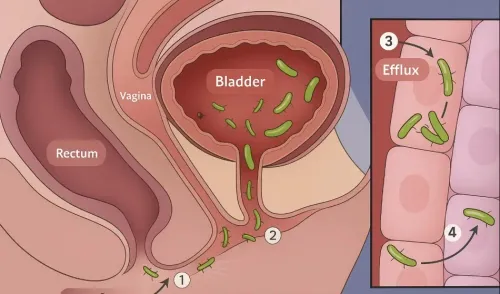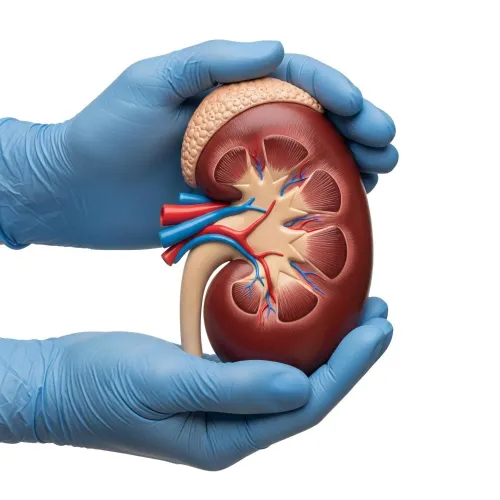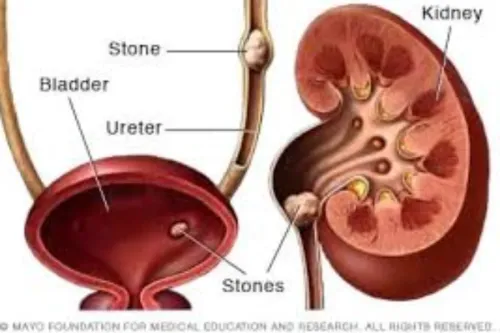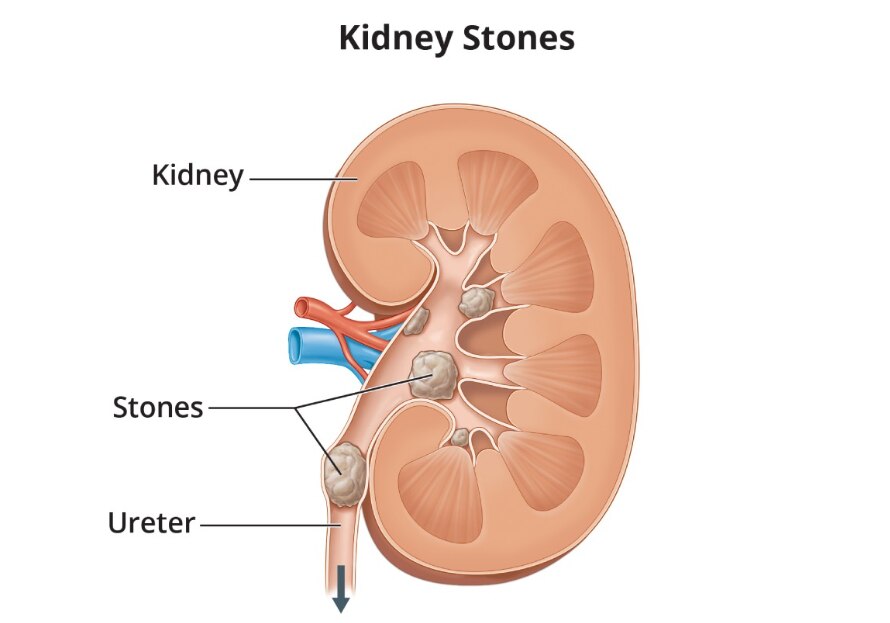
Urinary and abdominal symptoms can come from a moving stone, infection, muscle strain, appendicitis, gallbladder disease or a pelvic condition. You will be able to compare the symptom pattern, recognise an emergency, understand the tests used in Pune and see how stone size, obstruction and infection shape treatment.
Key takeaways
- Wave-like flank pain moving to the groin strongly suggests a passing stone.
- Fever, chills, vomiting, or difficulty passing urine needs urgent medical care.
- Ultrasound or CT confirms a stone’s size, location, and obstruction.
- Treatment depends on the stone’s size, position, symptoms, and kidney function.
Which symptoms point towards a renal stone—and which point elsewhere?
Sharp pain from the flank that travels to the lower abdomen or groin strongly fits renal stones symptoms, especially when it comes in waves as the stone moves. Pain during urination, urgency, frequency, nausea, vomiting, and visible or microscopic blood also support a stone, but symptoms alone cannot confirm the cause.
- Cloudy or foul-smelling urine, fever, or chills raise concern for infection alongside a stone.
- A urine dipstick showing blood supports a stone but does not prove it; stones can occur without haematuria, and blood has other causes.
- Severe pain does not reliably indicate stone size. An incidental stone on ultrasound or CT may not explain unrelated symptoms.
| Pattern | More likely clue | What it suggests |
|---|---|---|
| Urinary tract infection | Burning, frequency, urgency | Bladder infection |
| Kidney infection | Fever, chills, flank tenderness | Infection higher in the urinary tract |
| Appendicitis | Pain localising to the right lower abdomen | Appendix inflammation |
| Gallbladder disease | Right upper abdominal pain after meals | Gallbladder problem |
| Pelvic or menstrual condition | Cycle-related pelvic pain or bleeding | Gynaecological cause |
| Muscle strain | Pain changing with movement or touch | Musculoskeletal cause |
If you are searching renal stones for symptoms nephrologist in Pune, seek targeted assessment when the pattern is strong, particularly with fever, reduced urine output, or persistent vomiting. A urine test, examination, kidney-function test, and appropriate imaging are needed to identify the cause.
When does a possible stone become an emergency in Pune?
A possible stone becomes an emergency when urine flow is blocked, infection is present, kidney function is falling, or you cannot remain safely hydrated. An uncomplicated stone can cause severe renal stones symptoms while urine still passes and there is no fever or systemic illness.
An obstructing stone can reduce urine flow and silently damage kidney function.
| Pattern | What it means | Safe next step |
|---|---|---|
| Uncomplicated stone | Pain, but no infection, major vomiting, or reduced urine output | Prompt medical review and an agreed follow-up plan |
| Obstructing stone | Reduced urine flow, kidney swelling, rising creatinine, or minimal urine | Urgent hospital assessment |
| Infected obstruction | Fever or chills with flank pain, marked illness, or confusion | Emergency assessment; drainage may be needed |
Go to an emergency department or hospital in Pune urgently if you have:
- Fever or chills with flank pain, feeling markedly unwell, or confusion
- Persistent vomiting, inability to pass urine, or reduced urine output
- Severe pain that remains uncontrolled
- Pregnancy, a single functioning kidney, or known chronic kidney disease
An infected, obstructed kidney can deteriorate rapidly. Antibiotics alone do not remove the blockage, so waiting for passage is unsafe. Before assessment, drink normally rather than forcing water, note when pain began and changes in urine colour, frequency, or volume, and avoid repeated self-medication with painkillers. Take your medication list and prior scan reports.
Pain relief does not prove that obstruction has resolved, especially with infection or declining kidney function. This distinction matters when seeking renal stones treatment in Pune.
How do clinicians confirm whether a stone is causing the symptoms?
Confirmation requires more than a scan. Urine routine and microscopy look for blood, crystals, white cells, bacteria and other findings; blood supports a stone but does not prove it, and a stone can occur without haematuria. Request a urine culture when infection is suspected.
Serum creatinine shows whether kidney function is affected. A complete blood count helps assess infection or significant illness, especially with fever, chills or marked weakness.
Ultrasound avoids radiation and can show kidney swelling, some stones and urine in the bladder. It can miss a small ureteric stone and may not define the stone’s exact size or location.
Low-dose non-contrast CT is generally more accurate in adults for confirming a ureteric stone, measuring it and locating obstruction. It can also identify alternatives such as appendicitis or another abdominal cause.
| Test | What it establishes | Main limitation |
|---|---|---|
| Ultrasound | Swelling, some stones and bladder urine | Can miss small ureteric stones and poorly define their position |
| Low-dose non-contrast CT | Stone, size, location, obstruction and alternative causes | Uses radiation |
Clinicians choose imaging based on age, pregnancy status, kidney function and the clinical situation. Ultrasound is preferred initially during pregnancy. A scan finding must match your symptoms, urine results and examination; an incidental stone is not automatic proof of causation.
If seeking a renal stones doctor in Pune or renal stones treatment in Pune, ask whether this full assessment is included.
How do stone size, location and obstruction change treatment?
A small, distal ureteric stone is more likely to pass than a larger stone in the upper ureter, so confirmed stones do not all need immediate procedures. If pain is controlled, kidney function is stable, and there is no infection or significant obstruction, monitoring, symptom relief and follow-up imaging may be appropriate.
Medical expulsive therapy with an alpha-blocker can be considered for selected adults with a distal stone, especially when passage is less likely. A clinician must check blood pressure, drug interactions, stone location and complications first; it is not a universal prescription. Persistent obstruction, infection, uncontrolled pain or a rising creatinine shifts the decision towards intervention.
| Option | What it involves | Main trade-off |
|---|---|---|
| Shock-wave lithotripsy | External shock waves fragment the stone | Less invasive, but fragments may remain and repeat treatment may be needed |
| Ureteroscopy | A scope reaches the stone for extraction or laser fragmentation | Higher stone-free probability, but anaesthesia, instrumentation and possible repeat procedures |
| Percutaneous nephrolithotomy | Direct kidney access removes larger or complex stones | Highest stone-free potential for suitable stones, with greater invasiveness and anaesthesia |
An infected, obstructed kidney is an emergency: antibiotics alone cannot clear the blockage. Drain it urgently with a ureteric stent or nephrostomy, give antibiotics, and remove the stone definitively after infection control.
For renal stones treatment in Pune, ask a renal stones doctor in Pune to compare stone-free probability, invasiveness, anaesthesia and repeat-procedure risk for your scan.
Who should coordinate stone care and prevention in Pune?
Choose a renal stones doctor in Pune who verifies the diagnosis and gives you a safety plan, not just pain medicines. Ask whether the plan:
- Confirms the stone’s size, location and obstruction status on appropriate imaging.
- Includes urine testing for infection and serum creatinine to check kidney function.
- Explains exactly what to do for fever, reduced urine output, vomiting or uncontrolled pain.
The right specialist depends on the problem:
| Specialist | Main role | When to involve them |
|---|---|---|
| Urologist | Ureteroscopy, stenting, shock-wave treatment and other removal procedures | A stone needs intervention or obstruction requires procedural care |
| Nephrologist | Kidney function, metabolic evaluation and prevention | Bilateral or recurrent stones, chronic kidney disease, proteinuria, abnormal electrolytes, difficult-to-control blood pressure or suspected metabolic causes |
| Both | Coordinated removal and prevention | Complex stones with kidney-function or metabolic concerns |
A nephrologist for renal stones in Pune, such as Dr Nikhil Rathi, Kidney Specialist in Pune, can help when the stone question overlaps with kidney function, metabolic risk or long-term prevention. After passage or removal, request stone analysis. Recurrent or high-risk patients should ask whether a 24-hour urine assessment is appropriate.
Prevention should follow those findings: produce about 2.5 litres of urine daily unless fluid limits apply, reduce excess sodium, keep normal dietary calcium, moderate animal protein, and treat hypercalciuria, hypocitraturia or high uric-acid excretion. This makes renal stones treatment in Pune a continuing prevention plan, not only a removal procedure.
Related service
Renal Stones Kidney stones are hard deposits of minerals and acid salts that stick together in concentrated urine. View service → |
Frequently asked questions
Which symptoms point towards a renal stone?
Flank pain moving to the lower abdomen or groin, wave-like pain, painful urination, urgency, nausea, vomiting, and blood in the urine support a renal stone. Symptoms alone cannot confirm it.
When does a possible renal stone become an emergency in Pune?
Seek urgent care for fever or chills with stone pain, repeated vomiting, inability to pass urine, severe uncontrolled pain, or symptoms in a single functioning kidney.
How do clinicians confirm whether a stone is causing symptoms?
Clinicians combine your history and examination with urine testing, blood tests for kidney function, and imaging such as ultrasound or a non-contrast CT scan.
How do stone size, location, and obstruction change treatment?
Small stones without obstruction may pass with monitoring and prescribed medicines. Larger stones, persistent pain, infection, or blocked urine flow may require procedures such as ureteroscopy or shock-wave lithotripsy.
Who should coordinate stone care and prevention in Pune?
A nephrologist assesses kidney function, infection risk, and prevention. A urologist manages procedures when the stone needs removal or drainage.
Keywords